Battery selection for energy storage systems
Evaluate battery energy, inverter voltage limits, rack fit and controls together for a residential or commercial energy storage system.
Prepare a project briefWhat to specify
| Decision | Inputs to record | How to check |
|---|---|---|
| Usable energy and power | Usable kWh, AC kW, discharge duration and minimum operating temperatures. | Account for conversion losses, SOC limits and derating. Request the actual cell curves. |
| DC window and controls | PCS DC range, pack cutoff and voltage under load. BMS–PCS/EMS charge and discharge limits. | Agree the alarm map and behavior on lost communications. Check both ends of the DC range. |
| Rack and service access | Installed mass, module dimensions, connector access, cable bends, bonding and removal clearance. | Review support loading, anchoring and the module-removal path against the actual installation. |
Cell references for initial screening
Use these source values for an initial comparison. Pack voltage, current capability, physical fit and test evidence depend on the proposed build.
| Model | Cell route | Nominal cell values | Source edition |
|---|---|---|---|
| LFP314 | LFP · Prismatic | 3.2 V / 314 Ah | 2026 |
| JNP54173207H | SIB · Prismatic | 3 V / 200 Ah | 2026 H2 |
Sample acceptance
Agree test conditions for usable energy, power and communications faults. Match the documentation to the exact battery revision, system configuration and destination.
IEC 62619:2022 scope for industrial secondary lithium batteries · Review the evidence checklist
Residential solar storage reference
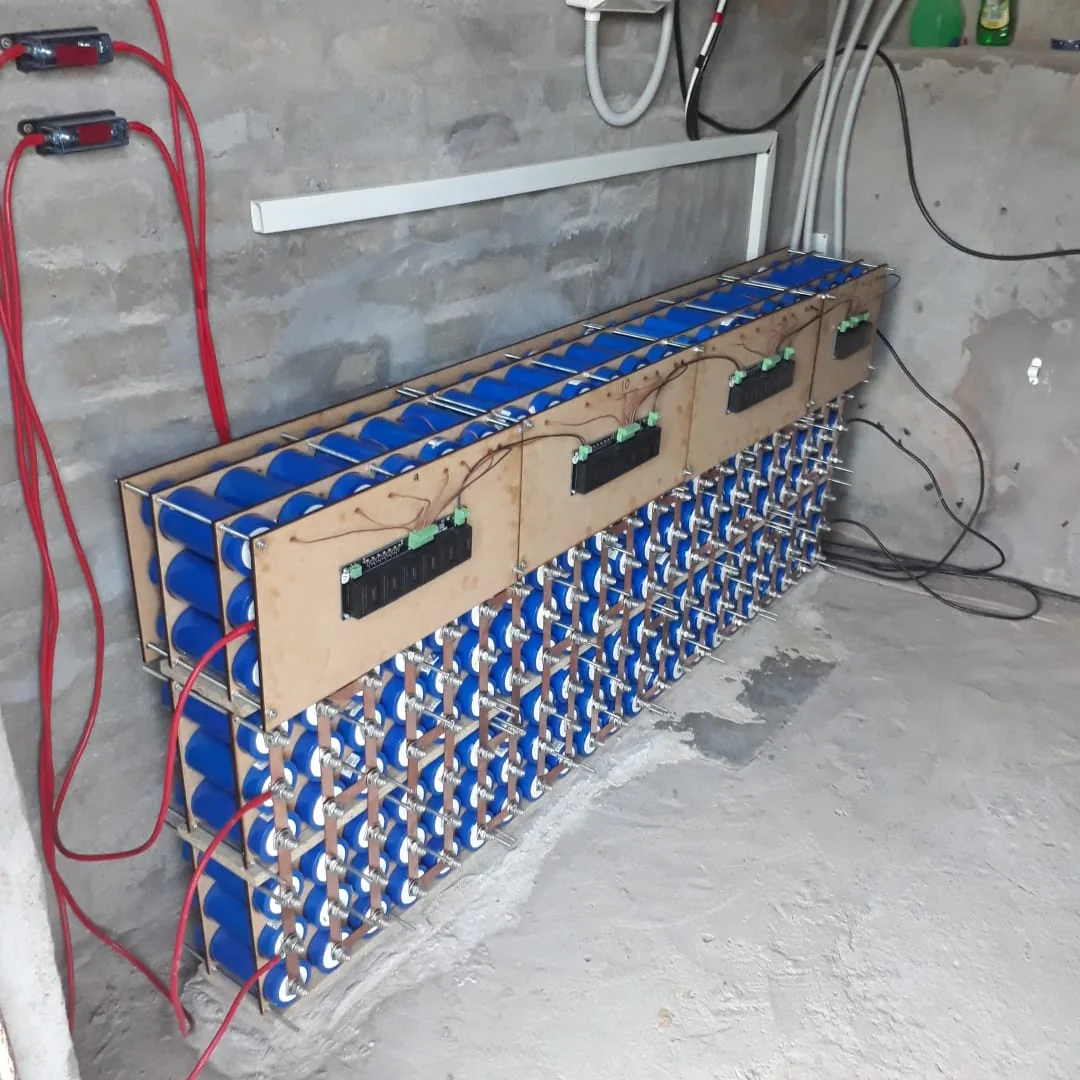
South Africa · 2018
The project record lists an LTO bank with balancing. Check the original build, inverter window and protection for your installation.